July 14, 2026
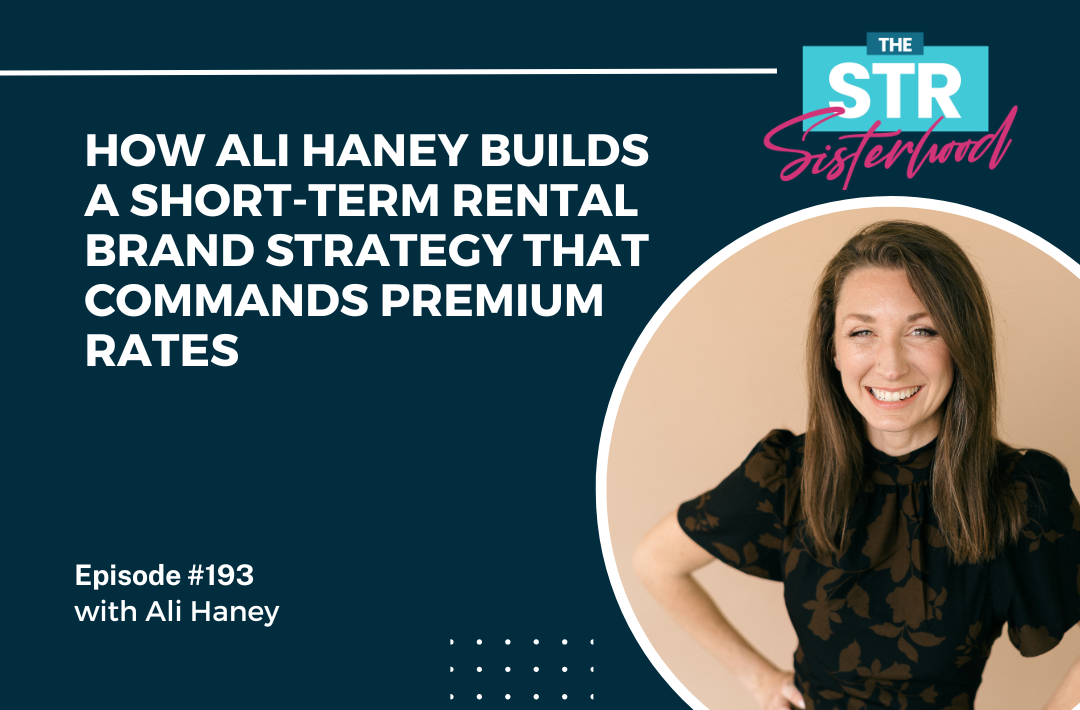
#193 How Ali Haney Builds a Short-Term Rental Brand Strategy That Commands Premium Rates
When Ali Haney, founder of Brand and Market, met a client with a one-bedroom cabin in Gatlinburg completely lacking internet access, she didn’t panic. Instead of viewing this missing amenity as a glaring weakness, she helped that host build a highly profitable short-term rental brand strategy around intentional, off-the-grid disconnection. We look at our properties and obsess over the amenities we’re lacking. We let surface-level specs dictate our market position.
You might think your current booking slump is a pricing issue. Look closer. The deeper pattern is a lack of clear identity. When your property lacks a specific point of view, you’re forced to compete in a race to the bottom on nightly rates. Are you building an actual brand, or just managing an active listing? The practical next step is uncovering what naturally differentiates your property and building an unforgettable guest experience around it.
Turning Gatlinburg Cabin Weaknesses into Superpowers
Ali transformed a perceived negative into a massive selling point. The cabin brand, “Tennessee Together,” now features a lockbox for guests to physically store their phones upon arrival so they aren’t tempted by notifications. They swapped Spotify for an analog record player.
As Ali states perfectly, “We took what she thought was a weakness and instead tailored the entire property’s brand and made it their superpower.” You don’t need fiber-optic internet to charge premium rates. You need a highly specific guest avatar and an experience built entirely around their deepest pain points.
Using ChatGPT to Analyze Short-Term Rental Brand Strategy
If you’re staring at your current listing and wondering how to uncover your own differentiators, Ali shared a brilliant market research hack.
Here’s how Ali approaches building a unique property identity:
- Analyze the data: Pull the geographic and demographic details from your past Airbnb bookings.
- Leverage AI tools: Paste your competitors’ reviews into ChatGPT to identify their recurring strengths and their most common negative complaints.
- Target the gaps: Use that AI-generated insight to install specific features, like an EV charger for high-income eco-conscious guests traveling from the city.
This instantly distills massive amounts of guest data into actionable insights for your short-term rental brand strategy. You can pair this AI analysis with tools like AirDNA to understand the granular market data driving those guest preferences.
Operationalizing Your Core Values
A strong brand isn’t just external marketing; it dictates your internal operations and team standards. I recently shared a story with Ali about a reliable maintenance worker who rehung a smoke detector in one of my properties using duct tape.
My team’s core value is excellence. If excellence wasn’t firmly established in our brand framework, I might’ve compromised and kept him on simply because he always showed up on time. Your core values help define your operational boundaries. When you’re managing remotely, those established boundaries reduce decision fatigue and make firing unaligned contractors a completely objective choice. If you want to learn more about establishing team standards, explore the coaching resources on my website here.
Marketing as A/B Testing, Not Personal Failure
Marketing your property shouldn’t trigger an identity crisis. Ali reminds us that running a new campaign or updating your brand messaging is simply a series of A/B tests. If a specific booking strategy doesn’t yield results, it’s a lesson, not a personal failure.
As Ali says, it’s taking something that feels like guesswork and giving a concrete answer to it. The goal is to let your data inform your next move, dropping the perfectionism so you can actively “do it scared”.
Click here now to listen to the full podcast.
HIGHLIGHTS AND KEY POINTS:
[01:07] A short introduction about our guest Ali Haney, and how she got into the world of short-term rentals
[03:12] Ali talks about using branding strategy to move beyond photography and create marketing that connects with ideal guests
[06:50] Ali explains how defining a property’s personality and turning perceived limitations into unique selling points creates a memorable brand that attracts the right guests
[09:32] How identifying a property’s natural differentiators helps build a stronger and more memorable brand
[10:49] Ali shares how operators can decide between separate property brands or a unified brand strategy when managing multiple listings across different markets
[12:39] Ali outlines portfolio-level values as the foundation for aligning multiple property brands while preserving each listing’s individuality
[15:40] Ali defines brand strategy as the foundational framework that aligns mission, guest targeting, differentiation, and messaging to guide every part of a short-term rental business
[21:14] How the core value of excellence creates clear operational boundaries and simplifies decision-making across hospitality and property management
[24:33] Ali highlights branding as a profit-driven strategy that turns one-time OTA guests into repeat direct bookings while improving long-term ROI
[27:51] Ali frames rebranding as a full strategic reset that goes beyond visuals to ensure alignment between guest targeting, design, and business goals
[30:16] Ali distinguishes between legacy brands and STR assets while outlining when rebranding makes sense and how to use guest data to guide the decision
[32:52] How competitor and review analysis can uncover actionable differentiators that directly shape STR brand strategy and guest experience design
[34:56] Ali reframes STR marketing as a data-driven cycle of testing and learning, separating performance outcomes from personal identity to support better decision-making
[37:31] Ali shares how short-term rental owners can begin building a brand strategy by using existing performance data and evaluating properties through a differentiation-first mindset
[40:07] The lightning round
Golden Nuggets:
- “You’re giving the house essentially a personality, so that people can start to feel like they know that property before they even step foot into it.”
- “We took what she thought was a weakness and instead tailored the entire property’s brand and made it their superpower.”
- “If we don’t have a strategy that we want to enact within our business and we just build pretty things on top of it, it’s probably going to fall down at some point.”
- “Create an experience that people want to return to, because it’s much easier to nurture a client or a guest that already trusts you, versus having to consistently acquire new ones.”
- “If we just take a small step each and every day, and we do that scared, that is still a huge amount of progress over six months time, nine months time, 12 months time.”
Connect With Our Guest:
Website : https://brandandmarket.co/
Instagram : https://www.instagram.com/brandandmarket.co/
Full Episode Transcript:
Stacey: Okay, so today we are joined by Ali Haney and we are going to be discussing the topic of branding from multiple angles. But first, Ali, thank you so much for being here.
Ali: Thank you so much for the opportunity to be here. I’m really excited to just share everything that I know in my experience from short-term rentals and branding and marketing. So open book here.
Stacey: I love it. So first, why don’t we start off and share a little bit about who you are and your background and maybe how you entered the short-term rental space?
Ali: It was completely by accident. I know that most people intentionally, you know, they purchase a short term rental to become an investment property. Our story was kind of a little bit like an uno reverse. We purchased our property, our first one back in two thousand fifteen, and that was purchased as a primary home. My husband was military at the time. And so when we got orders, we had to do something with our house. We thought perhaps maybe we would get stationed back there and wanted to maintain the asset so that we could move in easily at the time or if that time ever came. We initially transitioned that house into a long-term rental. We had it as such for one year before we realized that landlord life was not for us at all. And in a last-ditch effort to be able to keep that home, we converted it into a short-term rental. And we had absolutely no idea what we were getting ourselves into. We thought, in my head, I’m thinking, oh my goodness, I’m going to welcome guests with fresh-baked muffins every time they check in from five hours away, hosting remotely. That just doesn’t happen, right? So it was a crash course on how to not only become a short-term rental host, but also do it from a ways away. So that was our first foray into short-term rentals. And that was in two thousand nineteen when we opened those doors to that rental. And since then, we’ve actually sold that one, but accrued two more. And so now we’ve hosted in North Carolina, Kentucky and Virginia. So we’ve hosted being on the same property. We’ve hosted remotely. We’ve hosted across state lines and And that’s how we got into the short-term rental world.
Stacey: I love that. And so tell me about your branding side of your world and how you entered into that.
Ali: Yeah, absolutely. So I initially started my business in two thousand seventeen that actually started as a wedding photography business. This is going to be a little bit of a roller coaster of a story. But, you know, it all all of those kind of dominoes, they fall into where they’re supposed to be. So I started as a wedding photographer. And when my husband got out of the military, we moved to Kentucky. Remember, I said we still have that short-term rental there. We actually purchased that property to become a wedding venue. And we ran into a lot of issues with zoning and neighbors and all of those things that make property investors not be able to sleep at night. We hit every single one of those wickets. So at that point, when I was pivoting from that wedding venue owner position, title i was like i need a business that’s going to allow us to be able to be geographically free so that i don’t have to restart my wedding venue or wedding photography business over every single time we move because we were moving quite a bit and that is when i started the branding business because i had done dabbled a little bit of branding photography back during covid and i was helping to support some small business owners with their online marketing materials. And I just got a bunch of feedback. I said, hey, you’re really strategic about this. Even though it’s just a photography session, you’re asking me what my website needs are and my social media needs are. And so that kind of led me down the path of, okay, now I’m tailoring these photographs to be able to attract a specific ideal client or in short-term rental world, an ideal guest. And it really got me fascinated by the strategy behind all of that. And so I said, okay, this is a way that I can be both geographically free, but also pour back into the short-term rental community and take all of this knowledge that I’ve accrued from the last five years of running this business and bring it all under one umbrella so that it all works together as opposed to being in separate buckets. And so that’s how I got started in branding and marketing for people in the hospitality space.
Stacey: I love that. And I love that you are thinking not only strategically, but also creatively. Because a lot of folks might look at, let’s say, a photography business and have themselves in a box. Like, OK, well, my photography is my photography. And not be thinking about ancillary ways you can use your expertise where you can utilize the things that you’re passionate about and that you enjoy and apply it to either business number one, and then number two, apply it to our short-term rental businesses. So I love that you’ve done.
Ali: One of the main things that I would always see if I was like looking at someone’s, um, the images that they were using to present themselves online, it was always someone sitting down at a computer and typing. Every service provider had that same image. And I’m like, let’s dive a little bit deeper here, folks. Of course, what your everyday life might look like is you staring at a computer, but let’s start to bring to life what your ideal client’s life might look like so that they can see themselves in your images. And that’s the same way that I enact all of that with short-term rental guests. Let’s make this a lifestyle photo shoot, or let’s get into what their everyday life is going to look like outside of just that visit that they’re going to have those maybe three to five days at your rental so that we can start to speak to their pain points and show them how our rental is going to solve their specific issues.
Stacey: I love that. I love that. I want to ask you, I’ve got a couple of different topics or subtopics under the whole branding umbrella that I would love to just ask you about and get your perspective on. The first one is personal branding versus branding our properties. First of all, I’m curious what your thoughts are on the importance of a personal brand and a brand for our vacation rentals? Or do you feel like one is more important than the other?
Ali: me they serve two different purposes so first the let’s start with one that seems a little bit more tangible and specific that to me is the property brand right you’re giving the house essentially a personality so that people can start to feel like they know that property before they even step foot into it like i said we dive into who that guest might be that is actually coming to visit that property and what are their pain points and how can the, that property solve those pain points. So to give an example, there was one property that I worked with that was a one bedroom cabin in Gatlinburg, Tennessee, right? A relatively saturated market. We all know that if you’re in the short-term rental world, but we needed to figure out a way to differentiate that one specific one bedroom cabin. And she was like, I don’t know how to do that. We don’t even have internet. And I’m like, whoa, wait, wait, wait, wait. You don’t have internet? That to me specifically is a differentiator because so many people, those people that are coming to a one bedroom cabin, which is a couple, they probably are so tired of getting notification after notification after notification that if there’s a way they have to be off the grid, they’re going to want that. Yeah. So we took what she thought was a weakness and instead tailored the entire property’s brand and made it their superpower. We made it their differentiator. So that’s one way that you can take the built-in parameters that you might have around a specific property and make it into a full-fledged brand. So now that brand, Tennessee Together, has done everything centered around this off-the-grid type of brand promise, right? When you get here, I have a box waiting for you to put your phone in there so that you don’t have to you can just put it on. Do not disturb. And you don’t even have to look at it. We have specific like a record player so that you can be totally analog and you don’t have to be on the grid or use your phone for Spotify. Right. Already answered all those questions through the brand that’s going to make them want to return to that property. Does that make sense?
Stacey: Totally. Totally. I’m curious. How, if someone is listening or watching saying, well, that’s genius. Like that’s so smart to take your weakness, what someone thought was a weakness and turn it into a strength, if you will. How does the average person figure out how to do that?
Ali: Oh, that’s a good question. So I think if you were to sit down and you were to list all the things about your property, right? Let’s say, let’s just start with the specs. It might be five bed, three and a half bath. Location is twenty minutes away from the beach. We might have list your amenities if you have any. Just certain things about that type of property. And now I’m going to give you a cheat code. Drop all of that into chat GPT. And ask it and ask it to do some market research for you. Of course, you can do this through AirDNA to get a little bit more of like the granular research too. But once you know what you look like in comparison to other people in your market, then you’re able to start to pull those through lines or pull those differentiators out so that you can then create the brand around what’s already naturally differentiating you.
Stacey: Mm-hmm. Yeah, that’s really interesting. Really interesting. I love that. Okay, so you had mentioned that the brand for the property absolutely has its place. And I know you mentioned that you’re feeling that the personal brand serves a completely different purpose. Talk to us about that.
Ali: Sure. So with the personal brand, um, I see this more with founders within the hospitality industry. So let’s say I differentiate a, like one rental owner from someone who wants to have a full blown personal brand within the hospitality space. And typically what I see with those personal brands is they are going to have more than one purpose, right ? so let me give you an example i have one client who he owns two short-term rentals a boutique hotel and is developing a micro resort right so he’s very deeply embedded into the hospitality world but that personal brand is going to serve different purposes based off of which hat he’s wearing within that founder identity that day So it could be host of the short-term rental properties. It could be I’m acting as a consultant or a coach for other short-term rental or hospitality owners, or it could be for potential investors. So I have accrued this list of warm leads for potential investors. And now that I have a project that I want to invest on, I’m able to pull on them. So it serves a more holistic purpose that you’re able to have more of those niche or tiered audiences where you’re talking to multiple different types of audiences versus with a property brand, you are specifically targeting one guest to be able to get them to do one thing. Does that difference make sense?
Stacey: Totally. And my next question is for the people that it may not make sense to focus on a personal brand where they’re just focusing on the property brand, What happens when someone has, let’s say, a handful of properties in a handful of markets that are serving a handful of different ideal guest avatars? Do you feel like it’s important to have a through line between all the properties? Or would you think it’s totally fine just to have separate independent brands for each?
Ali: So what I would do is I would sit down and create a brand strategy for the portfolio. And what that’s going to do is basically you will have a set of values that you want to enact across all of those different properties and brands, but you can then create sub-brands for each of those individual properties. Because like you said, you might be targeting, one property might be a one bed, one bath cabin in Sevierville . while another one might be a five-bed, five-bath on the Kentucky Bourbon Trail. Those are going to be very different client avatar or guest avatars. But regardless, your portfolios, standards, and values, the things that are important to that specific owner, are going to be able to be enacted across state lines, across property differences, across guest avatars. And that’s something that you’re able to then give anybody that’s interacting with the brand or the business. So for example, the cleaners, contractors, anybody that might be going in there in between the stays that’s going to be bringing that brand to life. You then have that set of standards that is still brand consistent despite where the property may be.
Stacey: I love that. And, you know, for me, my values for my company, I not only share with our owners when we’re talking about potentially serving them as a property manager or a co-host. But I also hire and fire my team by our values as well. So your brand strategy that has your values can actually be, you know, the underpinning of your business as well.
Ali: I’ve found that most times people that are multi-passionate entrepreneurs, what it boils down to is that those values are really personal core values, regardless of whether or not you have an outward facing brand, but they then act as a guide or an infrastructure that’s going to allow you to make those decisions that you know are going to be aligned, regardless of whether it’s for hiring and firing or bringing on a specific property into your portfolio . it’s going to guide those decisions no matter how big or small. And typically they have a personal tie to your background or your story as to why those things are important to you.
Stacey: Yeah. Yeah. One thing that you also mentioned that I want to go a little deeper on is a brand strategy. So You know, it’s quite interesting because when we think about the world of marketing in general, you know, as short-term rental owners, operators, hosts, we have a big job. We have a very big job. And there is quite a learning curve when it comes to learning how to operate a short-term rental business. When we think about marketing in and of itself, I always tell people, there are four-year college degrees for this. And there are people that are doing, obviously, their best to market themselves and to do everything in-house. It would be my guess that most people generally speaking, don’t know how to put together a brand strategy. Okay. And I don’t say that to speak ill of anyone. It’s just, that’s not something that we learn in high school or college or anything like that. So if you are talking with someone and saying, Hey, it’s important that you have a brand strategy. And if you’re going to do it yourself, here’s what you need to know. What say you?
Ali: Absolutely. So first how I explain it, and this kind of resonates with a lot of real estate investors is brand strategy is the foundation of your business. Okay. So if we don’t have a strategy that we want to enact within our business and we just build pretty things on top of it, it’s probably going to fall down at some point. So what that brand strategy is, is your mission, your values that we’ve already talked about. It’s going to be that ideal guest avatar. Like I’m legitimately going to give that person or that family a name. They’re going to have hobbies. They’re going to have their own core values. They’re going to have their own pain points. I make sure that I personalize that or personify that within that brand strategy document. We are going to dive into what differentiates you between other people in your market or other properties in your market. Even if you have the same amenities, how are we going to differentiate ourselves beyond just the check sheet, right? Are we going to differentiate ourselves in terms of guest experience? That’s an easy one to do because not many people do. They check those boxes. They make sure the amenities are up. The listing is up. And then after that, it’s gravy, right? But we’re leaning into that true like hospitality type of mindset where how can we differentiate that guest experience once they walk through the front door? And then one big piece that people often miss is how it kind of brings it all together is your brand messaging. And so this feels super intangible. And I think that’s why people kind of stumble on this part but what i do with brand strategy is i create different messaging pillars or content pillars and then each one of those content pillars is going to have specific words phrases stories that we can repeat throughout all of our online marketing That could be on our direct booking site. That could be on our blogs, our email newsletters, and top of funnel. I know that’s a little bit of marketing jargon, but on social media where they first interact with your brand, most likely. And from there… we’re able to give a little bit more of a tangible framework. Okay, now this is the topic we’re going to be talking about and this is how we’re going to be talking about it so that it specifically talks to the family or the individual that we’re trying to get to book our specific property. And so that kind of gives you a little bit more of a framework, that very deep framework heavyset foundation so that then we can move on to the pretty things that we always think about, right? Which when we think of branding, we think of logos and colors and fonts and all the pretty things. Absolutely. That’s a part of it. But without that brand strategy and knowing who we’re targeting, how we’re targeting them, what’s important to them, all of those pretty things don’t really matter because they probably won’t resonate with the people that you want them to resonate with.
Stacey: Right. Right. So important. And then once someone has a brand strategy, is it just a document they throw in the drawer and say, okay, thanks for doing this, Allie. I’ll… Catch you later. You know, how do they, how do, let me rephrase, how do you recommend that people utilize that brand strategy document, if you will, and make it the underpinning of their business?
Ali: Y’all better print this bad boy out and have it on your desk whenever you are planning social media content. If you are planning your direct booking site, I want you to have that messaging guide right next to you. We’ll include a brand voice or a brand tone in that. So if you’re hiring a copywriter or you have a social media manager. This is a document that everyone that’s involved in your business needs to see in one way, shape, or form. I mean, we even mentioned it before, right? The values that we want to enact across all of our properties across multiple states, have those values and show them to your cleaner. It might sound extra, but I can guarantee you that when your guest walks through the door, they’re going to feel a difference.
Stacey: Yeah. Yeah. It’s funny. I tell this story. One of my core values for my business is excellence. OK. And I think about excellence being a part of our business for everything that we do. From the quality of the properties themselves to the quality of our clean to the quality of our, you know, guest communications, how we maintain the properties. And it’s something that I do have that conversation with my maintenance team, with my cleaners, everyone that comes into our business understands that excellence is a priority. I had a maintenance person that I had asked to rehang a smoke detector, okay? And this happened to be in a property that I own. I mean, my team had created a work order for him to go rehang the smoke detector. And I walked into that property. Mind you, I live ten hours away. And so I don’t walk my properties every day, you know. Happened to walk into that property. And I noticed that the smoke detector was hanging by duct tape. No. I had this conversation with the maintenance guy saying, how is it that we think that duct taping the smoke detector is a sign of excellence? Like, Help help me understand. Right. Of course, he didn’t have he did not have a good explanation, but I never worked with him past that. You know, he was reliable as the day is long. And at the time, you know, well, still, reliability is super important. However, if you’re not going to treat my properties with the level of care that I want for my clients, it’s not a good fit. You know, it’s not a good fit. So it’s important that those values, like I said, kind of live within your business as far as I’m concerned.
Ali: And I’m looking at it from a perspective of if you hadn’t had that, it would have been very easy to let it go. Yeah. Right. If excellence wasn’t a consistent part of every single decision that you made, you would have been able to kind of bargain with yourself. Well, he does show up on time and you would have kept him probably. Right. But with that value being so ingrained, it made it a very clear and therefore very easy decision to make on behalf of your business and your brand.
Stacey: You know, it’s interesting. I haven’t thought of it as your values help define your boundaries, but that is absolutely true.
Ali: exactly what you said they go hand in hand because you’re right had i not had that value i totally would have just said oh man dude we we don’t hang smoke detectors with duct tape okay don’t do that again and move on right but right exactly and like i said it just makes it a very easy decision In the short-term rental world, we have a lot of decisions to make, a lot of messages to respond back to. If I can reduce that decision fatigue by having a brand strategy in place, let’s do it.
Stacey: Yeah. The other thing that I’m curious about in your line of work where it’s, I feel like marketing, I feel like branding is highly specialized. I feel like branding especially, and I am not here to step on toes. What I want you to do is help educate the public about the importance of branding. Because I think a lot of people think about Branding is just this kind of big pie in the sky, ethereal. Well, I’ve got my favorite colors. I’ve got my logo. I don’t really need anything else. I’m just a short term rental host. You know, what say you about the importance of branding?
Ali: That’s a loaded question, but let’s go down it. So in an ideal world, you get into short-term rental ownership because you want to make money, right? Yes, it might be a lifestyle asset that you want to enjoy with your family too, but primarily you purchase that asset because you want to make some sort of revenue or profit off of it. The best way to do that is to create an experience that people want to return to because it’s much easier to nurture a client or a guest that already trusts you versus having to consistently acquire new ones. Okay? Yep. So let’s think of it in terms of any given host. What is the first thing we do as a short-term rental owner? We throw our listings up on Airbnb and VRBO. That’s not a bad thing to do. But now, especially since Airbnb has changed their fee structures, we’re paying out fifteen and a half percent every single time we allow them to acquire a new guest for us. Okay, that’s fine. Let’s look at that as an investment into the future because once they come and they experience our property. How can we then retain that guest at a much lower percentage, but with a direct booking site that’s going to allow them to be brand loyal? Okay. So branding is, people ask all the time about like, what is the ROI on branding? Can I give you a specific number? Probably not. But can I paint the vision for you, right? Now, instead of paying fifteen and a half percent every time we host this person, we now have a warm lead that’s willing to trust that already trusts us and is willing to return back to us, perhaps create a family tradition around our property. And now we’re paying out three percent every year instead of fifteen and a half. That’s a twelve and a half percent ROI right there . so in being able to build that infrastructure it is an investment up front but it’s an investment to the future so that you can then regain that portion of profit back.
Stacey: Yeah. Yeah. I love, by the way, I love how you just laid that out in such clear terms. A lot of folks I’m sure are listening and watching going, that makes total sense. Absolutely, Allie.
Ali: It really helps that I also actively own and operate our short-term rentals. We have two, one in Virginia and one in Kentucky currently. And so I live this every single day on both the operator side as well as the service provider side. So it’s not like I’m trying to sell something that I don’t believe in. It’s something that I use every single day.
Stacey: Absolutely. Absolutely. Okay. I want to switch gears a little bit and I want to talk about maybe there’s someone listening or watching that… they either have not branded their property at all, or maybe they have a brand for their property that they’re like, dude, nineteen eighty called and they want their their brand back, you know. So let’s talk about rebranding. What is important? If someone wants to go down the rebranding route, what is important to consider and keep in mind?
Ali: So we always want to start with the brand strategy. We’ve already kind of touched on that and shown the importance of that. But a lot of times people think, oh, maybe my brand just needs a few tweaks. But it’s kind of like, think about it as a gear . right? A gear shift. And you have all these different pieces that when they’re running, they run smoothly. But then you take one piece out and maybe it doesn’t run so smoothly anymore. It doesn’t run at all. So anytime someone approaches me with a rebrand, it really is like starting from scratch. And that’s not a bad thing. But I think a lot of people are like, well, I have this infrastructure. It feels like a waste to just do away with part of it if I can use part of it. Yes and no. I have a lot of people that come to me with like, I bought this turnkey short-term rental. It was just newly designed and it’s up and ready to go. I just want to slap a name on it. And I’m like, There’s ways to use pieces of it. If there’s something like a major investment, you just went through like an interior design, short-term rental specific, like redesign. But I want to make sure that it’s also going to support the guests that you want to attract. And I’m also going to make sure that it actually conveys well online . because graphic design and interior design are two different things so when your designer presents you with a color palette that color palette is going to mean that it looks really good on the textures and the furniture and the walls but that doesn’t necessarily mean that it’s going to look good and be readable on a website so i do try to like i meet people where they are right like sometimes there are real life constraints that aren’t going to allow you to have an unlimited budget. But if I’m going through a rebrand, I want to make sure that I’m doing it thoroughly and correctly and that it’s actually going to support those business goals rather than work against them and be a check in the box.
Stacey: Interesting. And have you ever experienced it where someone’s come to you and said, hey, I want to do a rebrand and you feel like they shouldn’t, they should keep their existing brand? I think about the example of Cracker Barrel, right? Where the whole world seemed to unfold you know, when they went to change their logo, is there ever a point in time where it doesn’t make sense to do a rebrand?
Ali: That’s a good question. I think less in terms of the Cracker Barrel example, that was such an established brand that that’s a little bit different than a short-term rental that you would acquire as an asset. I understand the through line you’re bringing up, but I don’t know that it necessarily applies to the vast majority of short-term rental owners . um but in terms of like like i like kind of the example that i gave before right you acquired this new asset and you’re like do i change everything about it or do i just let it ride it out and in that case i would say if there’s if it was previously run as a short-term rental that gives us a lot of insight like especially if i have the old airbnb listing i will go and i will pull all the reviews from the old airbnb listing and run them through chat gpt this is a great like uh cheat code. Like go and run through, like basically you just copy and paste all the old reviews, throw them in chat GPT, say what are the top three like best reviewed things about this property and what are the bottom three like most negative things about this property? And that basically condenses all of that data down into a nice little digestible piece of information. And you can utilize that to find the differentiator, probably some areas that you can continue to incorporate in the brand. If you’re looking to make small tweaks at the beginning because you just made a sizable investment in your down payment and potentially some renovations on the interior and you don’t have the funds to be able to invest in a full brand strategist and brand designer. So that would be kind of an in-between. I think if I was trying to look to DIY something myself, that’s still going to give you some really valuable insight into the rental and what types of guests are going to be staying there. Another kind of follow-up point to that, the top three, bottom three. Also, if you pull that Airbnb listing, Airbnb typically will include the locations where they’re traveling from And sometimes they can include like the, the genders of like the people that have booked. So you can pull that demographic information and see already what type of guests are, is this property attracting and how can I tailor or tailor the guest experience to that type of guest?
Stacey: Yeah, yeah, I love that. I also love doing that same exercise with copying and pasting reviews, putting them in the chat GPT with competitors, right? So I… I love it because I can see what my own potential differentiators are. But if I feel like they’re differentiators, but then my competitors have a similar differentiator, then it may not be strong enough. Right. So I love it with my own reviews as well as my competitors reviews to kind of really, really hone in on what I can do to set myself apart.
Ali: Oh, let me give you like, sometimes it’s, again, this feels a little bit intangible. Let me give you like a concrete example for your listeners. So let’s take a rental that’s in like the Catskills of New York, right? We’re probably going to be pulling from a drivable distance about two to three hours, probably not international, but probably from a major city like New York, maybe like outskirts of New Jersey, maybe Connecticut, like right in that radius. Okay. So now I know based off of those reviews, that’s where my people are coming from. And I know that it’s going to be a two to three hour drive for them. Okay. Well, my rental is, let’s say, four bed, four bath. So it’s probably going to be groups of couples or an extended family, right ? but they, my nightly rate is like six hundred dollars a night. Okay. So that means they’re probably going to be relatively high income earners, high income earners, a typical like car that a high, high income earner that’s maybe health conscious or eco conscious is going to be is maybe, maybe it’s a battery powered car, like a Tesla. Okay. But absolutely none of the other competitors in my market, none of the other properties have an EV charger. Very simple way to make your brand come to life and attract your very specific guest just by doing the research behind it. And so that’s like one like specifically tangible way that you can use that data to actually make real decisions about how you’re going to bring your brand to life.
Stacey: Amen. I love what you just mentioned about using that data because so often I feel like folks are operating their short-term rental businesses with drama. And I don’t mean that in a poor me type of a state. I just mean drama. They’re just… Letting things happen to them. Yeah, they’re letting things happen to them and they’re reacting in the moment versus when you lead with data, you’re always proactively looking forward and backward to say, what does my historical data tell me about what optimizations I can make for the future? And so often when people go to make optimizations, again, they’re just like throwing spaghetti at the wall. Well, I’m not getting the bookings that I want, so I guess I need to lower my price. Or I’m not getting the views on my property that I want, so I guess I need to switch my lead photo. And when we look at data, we know it Generally speaking, we have a much stronger vantage point to know what our next step should be. Would you agree?
Ali: Absolutely. And like I said, you can use all of that to inform your, your brand strategy too. Again, it’s taking something that feels like guesswork, something that feels intangible and giving a concrete answer to it. And at the end of the day, like marketing really is like a bunch of AB testing. We can try an idea. And if the idea doesn’t work, it’s not a failure. It’s a lesson that we’ve learned moving forward. So I don’t want there to be like throwing spaghetti at the wall, but I also don’t want there to be like an analysis paralysis or a fear of failure because you’re trying something and it might not work. It’s okay if it doesn’t work. We’re going to let that inform our next decision of what might.
Stacey: Yes, yes, yes, yes. I also think it’s important for folks to know if something doesn’t work, as you just mentioned, it’s not a failure. We just pivot. We try something new. And I love… The thinking that marketing is literally just testing and learning, testing and learning because we’re constantly in motion, right? And I think a lot of times people too, they kind of attach their personal performance to the marketing performance and that doesn’t need to happen, okay? Just because a marketing campaign didn’t work doesn’t mean that you’re bad at what you do or your property isn’t worth what you think it is, okay? It’s just a test. It’s just a test. So good. So good. So Allie, if someone is listening or watching and… They haven’t ever considered having any sort of a brand strategy and they want to take one step to get started on their own. What would you say their best first step would be?
Ali: Can I ask a follow-up question to that? Do they have the existing rental or are they purchasing a new one and haven’t jumped in yet?
Stacey: Well, I think we need an answer for both.
Ali: Okay. So if I have the rental and it’s been active for a little bit, the first thing I would do is pull the data that you already have, whether that’s from your PMS or if that’s from your actual Airbnb listing itself. We just gave you a cheat sheet on how to tailor those reviews and Let that test re-inform your next move for your rental. That’s going to give you the very basis of your brand strategy as well because you’ll know where your guest is coming from. You’ll know typically the age or at least the gender of the guest that’s booking. Okay. So you already are starting on your ideal guest avatar because you have that data to inform those decisions. And there’s nothing that you need data wise to define your core values either. You didn’t need chat GPT to tell you that excellence was something that was important to you. Okay. So get a little bit of, get a little bit of introspection going and figure out what’s important to you and how you can pamper your guests with those values in mind. Now, if you don’t have a rental yet, I would say find something in a market that you would enjoy visiting yourself. And then whenever you are going to look at that listing, think about what differentiates this listing from others in the market. Because that’s one of the biggest pieces of branding is figuring out what makes you different. Because… You want to be the best in your brand and your market, right? And so how can we do that other than to be different and make sure that we are able to eloquently tell people how we are different? So when you’re looking at properties, if you got one that has a little kids playground in the back, if you got one with a spiral staircase that you feel like can inform a brand name, like anything that you think is going, you don’t have internet, like anything that you think can differentiate that property . go through it, go through that, those property viewings with that lens, what’s going to make this property different for us.
Stacey: That’s great advice. Great advice. Okay. Allie, I want to switch gears. Okay. I want to go to the lightning round and I’m going to ask you a series of questions and you just have to answer with the very first thing that comes to mind. First question, where is your favorite place to vacation?
Ali: Outer Banks, North Carolina.
Stacey: Ooh, I have been there multiple times. I agree. It’s pretty phenomenal.
Ali: I grew up going to Hatteras every year. We camped in an RV every year. And then now that we have grown up a little bit, now we get to rent a house.
Stacey: You’re moving up in the world. I love it. Okay. What’s one place you’ve never been that you want to visit?
Ali: Um, continental us or like international anywhere.
Stacey: Yeah.
Ali: Iceland.
Stacey: Okay. Now that’s interesting. What makes you say Iceland?
Ali: Um, I have had a couple of friends that have been to Iceland and they are like, absolutely. You need to go during puffin season and you need to go hiking and you need to see the black sand beaches. So at some point in my life, I will be making a trip to Iceland.
Stacey: There you go. There you go. I think I have had a few other people name Iceland as well. And my years of doing these, I feel like, first of all, I should be capturing the data. Okay. I should be having some sort of spreadsheet that says, okay, another tick for Iceland. So I always know who’s winning, but I don’t.
Ali: Come on. Puffin season? Puffins are so cute. How could you say no?
Stacey: Okay, next question. What is one thing you know now that you wished you knew when you were starting out in the world of short-term rentals? Outside of the branding piece of it? You can incorporate branding into that as well if you want.
Ali: Yeah, I would say that… Oh, this is hard. I feel like I’ve learned so much. My first thing that came to mind was one night stays. One night stays, they were hard for us in the market that we were in when we first started. We were in a military community with a lot of young military members that liked to party and could not do so in the barracks. So when I allowed the one night stays when we were very fresh hosts, I paid dearly for that decision. Um, I have now since learned that not all one night stays are going to be parties, but definitely increases the chances of it.
Stacey: Yeah. Yeah. And so to this day, do you allow one night stays in your properties?
Ali: Until about three weeks ago, no. We hired a revenue manager for the very first time for our Virginia and Kentucky properties. And they encouraged me to give it another try after, I guess, seven years of not allowing it. And because of the type of property that the Kentucky property was, which is one that’s been most consistent for us, It’s a five bed, five and a half bath. So the one night stays don’t really make sense anyway. But for the new Virginia property, which is two bed, one bath, it’s sometimes a stopping point for people on road trips. And that’s a much different, again, guest avatar than the young enlisted military guys that are trying to have a rager and play beer on their hardwood floors.
Stacey: Oh, gosh. I’m getting a visual. Yeah. Yeah. Okay, that’s a good one. That’s a good one. Next question. What’s the best piece of advice you’ve ever been given?
Ali: Do it scared.
Stacey: Ooh, that’s a good one.
Ali: Took me a second, but honestly, I think that’s probably been the biggest piece of advice that’s been most impactful because I don’t know if I’m supposed to share all these personal stories on the lightning round, but- The Kentucky property was really impactful for us. Like I said, it was a purchase to be a wedding venue. And when we went through these zoning issues, I kind of put a little bow on that story every time and kind of gloss over it. But it was about two years of our lives that were riddled with zoning hearings and neighbor issues and all of the things. And I think for a while after that experience, I was scared. Like there was a lot of fear and feeling of failure wrapped into that whole experience. And I thought that I had done all of the data and done all of the research and all the things. And despite all of that, my lived experience was far different than what the data told me to expect. And, um, it took me a while to recover from that experience. And now just now within the last nine to twelve months or so, I feel like I have been able to embrace it and begin to to do it scared again. That doesn’t necessarily mean do it messy because I know a lot of us business owners are type A. We want everything perfect, but you don’t have to have all of the answers in order to take the first step. So I’m scared. And the other piece, if we just take a small step each and every day and we do that scared, that is still a huge amount of progress over six months’ time, nine months’ time, twelve months’ time.
Stacey: What happens is folks, when they get out of their comfort zone, they step into the fear zone. The way that our subconscious minds work our subconscious mind is naturally going to try to get us back in the comfort zone, okay? So we really have to be committed to the outcome and push through the fear. And I also think that’s one of the one of the many wonderful things about community having community around you because it’s a heck of a lot easier to do it scared when you’ve got people around you that you can lean on that can encourage you with whether it’s words of encouragement or their own experiences to be able to borrow that bravery from other people, at least in my experience.
Ali: Absolutely. And to compound on that, not just community in general, but people that are going through the same things as you, because not everybody lives the life of a short-term rental investor. Not everybody’s dealing with check-ins and checkouts on the same day when the toilets are backed up and nobody can flush the freaking toilet. Like that’s the differentiator in the community is that like if people understand what you’re going through and they truly can empathize and sympathize, that’s the game changer.
Stacey: Amen. Amen. All right. Last question. What’s one thing and or person that you’re grateful for today?
Ali: Oh, my husband, my husband. I’m grateful for him today. He’s the one that, uh, I’m the visionary, so to speak. If we go to like those, those typical, um, business roles, he’s certainly the integrator one willing to get his hands messy. I have the big, I know what the end goal is, but he, he gets us there. And so I’m really grateful for that.
Stacey: I love that. I love that. And I’m going to, I always try to encourage people to tell, um, Tell those folks that you’re grateful for them because it’s so easy to think about the fact that we’re grateful, but we don’t actually say it out loud to them. So anyway.
Ali: Amen. I will do that as soon as I get off this episode.
Stacey: Okay. Good, good, good. Allie, if folks want to learn more about you or maybe perhaps reach out for some branding support, where is the best place for them to find you online?
Ali: Sure. So I truly believe in keeping a brand consistent. So literally any platform you will find me on, it’s at brandandmarket.co. So B-R-A-N-D-A-N-D-M-A-R-K-E-T.co. That is for Instagram. That is also for my website, brandandmarket.com. So I will be looking forward to talking to you guys. And as always, even if you’re not looking for branding and marketing services, I’m an open book and happy to share my experiences so that I can be one small part of the community that maybe you need right now.
Stacey: Amazing. Thank you so much for being here.
Ali: Of course. Thank you for having me, Stacey. It was a great conversation.
Did you enjoy the episode? Don’t forget to Subscribe, Rate, Review, Like, and Share!